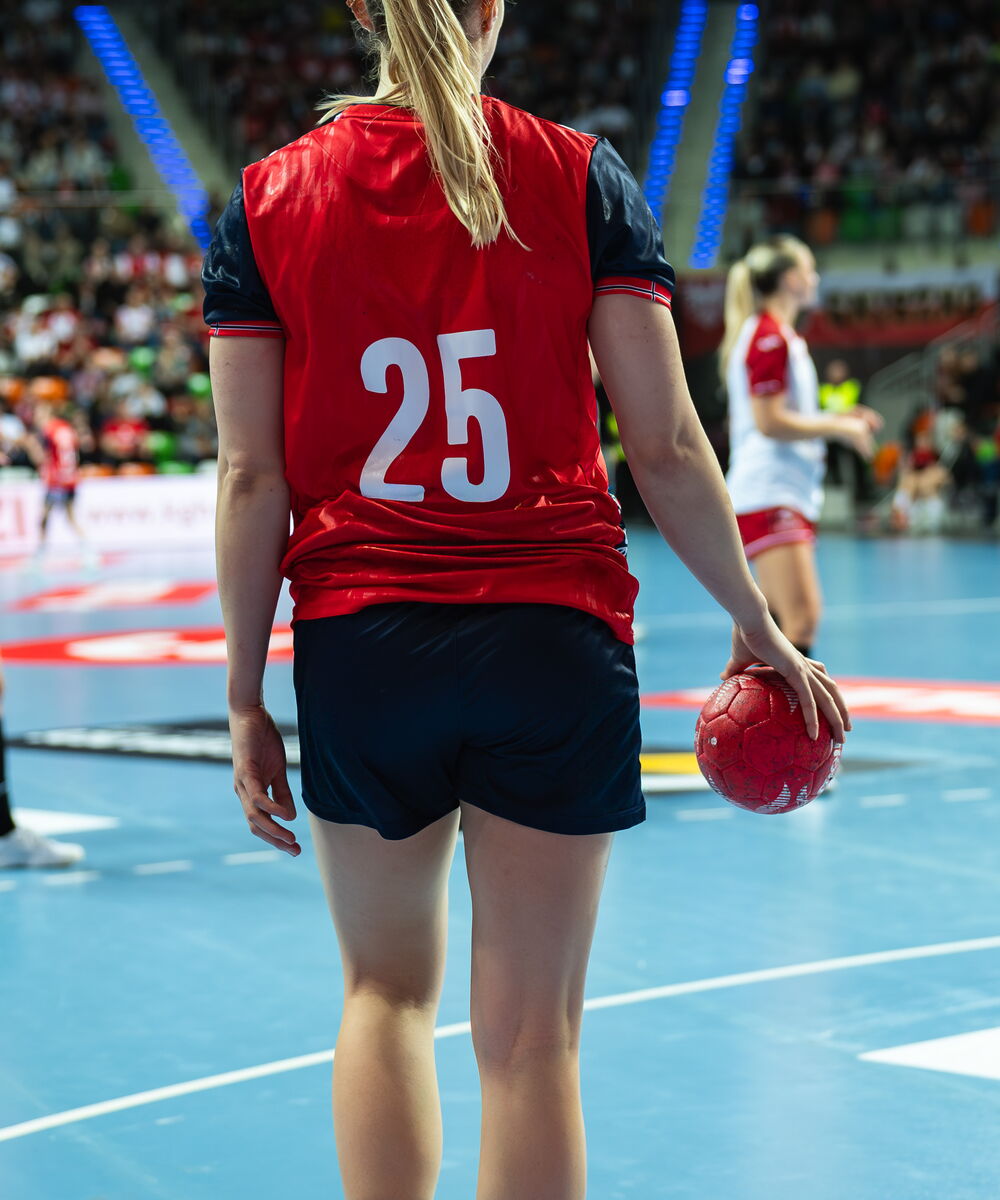
Which indoor sports floor is the right one?

Point-elastic, mixed-elastic, combined-elastic and area-elastic: Explained simply

Every jump, every sprint, and every landing starts with the right sports floor.

Yet not every indoor sports floor responds to impact in the same way.
Point-elastic, mixed-elastic, combined-elastic and area-elastic sports floors differ in how they absorb, distribute and return forces.

Which sports floor is the right one in the sports hall?

Four different levels of elasticity are available for sports halls. The deformation of the floor when a force is applied results in the type of elasticity, which is tested according to the DIN standard. The pre-standard DIN V 18032-2 describes the requirements of the sports-functional, protective-functional and technical properties of the sports floors in sports halls and their testing. These include the four elasticities.

What is a point-elastic sports floor?

A point-elastic sports floor (PEL) yields locally at the point of impact when subjected to load.

The deformation is limited to a small area around the point of impact or load. This allows shocks to be absorbed quickly and reduces stress on the joints.

Point-elastic sports floors typically consist of several layers, such as a primer, an elastic layer, and a sealant.

IN SHORT: a small, localized crater

Systems:
PORPLASTIC INDOOR PEL basic
PORPLASTIC INDOOR PEL extra
PORPLASTIC INDOOR PEL mesh

What is an area-elastic sports floor?

An area-elastic sports floor (FEL) distributes applied forces over a larger area.

Deformation does not occur at specific points, but rather over a wide area across the supporting structure.

Area-elastic sports floors are frequently used for performance-oriented sports and provide ideal conditions for ball sports and team sports.

IN SHORT: significant, widespread deflection across the entire structure

What is a combined-elastic sports floor

A combined-elastic sports floor (CEL) combines the properties of a surface-elastic and a point-elastic sports floor.

The surface-elastic subbase distributes the load over a large area, while the point-elastic top layer provides additional localized give. As a result, the floor combines high athletic comfort with good shock absorption.

IN SHORT: localized indentation and large-area floor deflection

System:
PORPLASTIC INDOOR CEL combi

What is a mixed-elastic sports floor?

A mixed-elastic sports floor (MEL) combines the properties of point-elastic and surface-elastic sports floors.

The deformation under load falls between that of the two system types.

The elastic top layer and the surface-stiffening construction improve both athletic performance and comfort.

IN SHORT: medium-sized deformation zone

System:
PORPLASTIC INDOOR MEL compound

Still unsure about which flooring to choose?

Are you planning to build a sports hall and unsure which sports flooring best suits your needs? We’d be happy to advise you on choosing the right flooring system.

Meike Ulrich

Contact

Meike Ulrich

Business Unit Manager PORPLASTIC